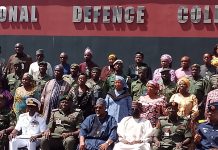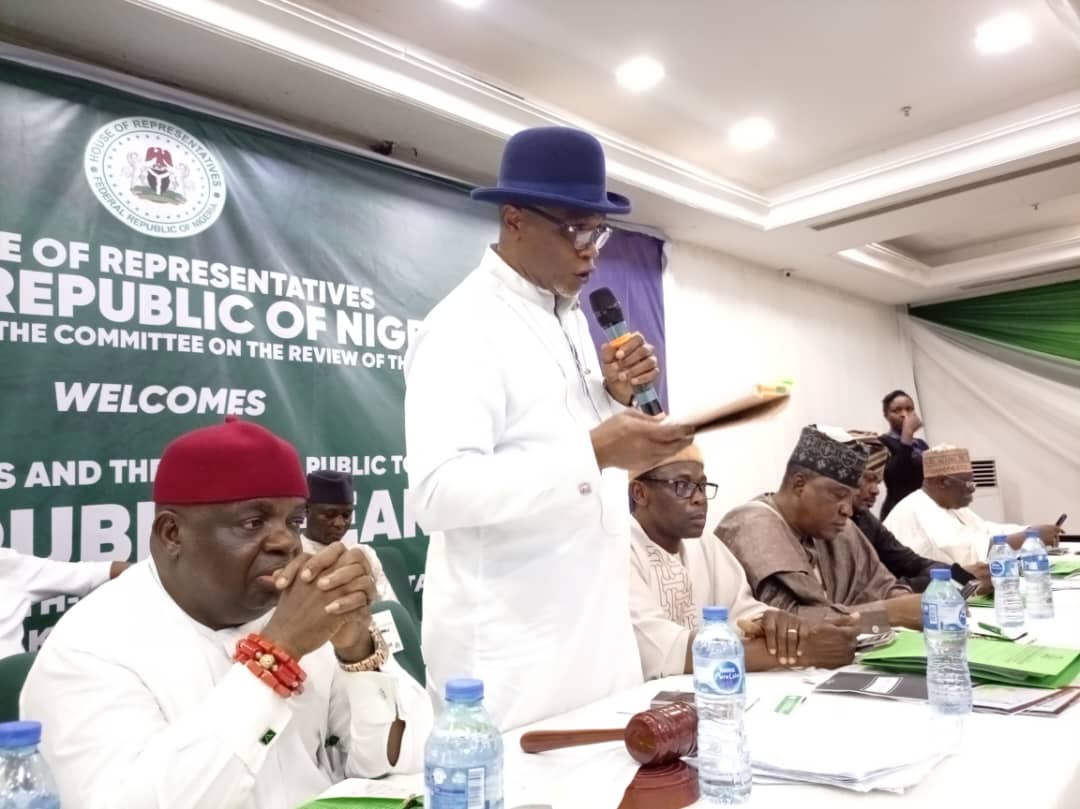

The House of Representatives ad hoc committee tasked with reviewing the 1999 Constitution has commenced its exercise in Calabar, the capital of Cross River State.
This initiative aligns with a resolution of the House of Representatives.
The South-South zone is conducting its review in Yenagoa, Bayelsa State, encompassing Edo, Delta, and Bayelsa states.
Meanwhile, Zone A, comprising Rivers, Akwa Ibom, and Cross River States, is holding its session in Calabar.
The leader of the review committee and Minority Leader of the House of Representatives, Rt. Hon. Kingsley Chinda, led the Constitution amendment committee on a courtesy visit to the Obong of Calabar, His Eminence Edidem Ekpo Okon Abasi Otu V.
During the visit, the facts of the exercise were discussed, and the Obong encouraged the committee to ensure that the aspirations of Nigerians are duly considered.
He also pledged to mobilize his subjects to make representations to the committee.
The Deputy Governor, Rt. Hon. Peter Odey, who received the House delegation expressed support for the exercise.
However, he highlighted concerns regarding limitations faced by state governments, particularly concerning the authority to extract minerals, which currently falls under the exclusive purview of the federal government.
According to the Deputy Governor, this restriction hinders states from mining rights, thereby impeding development and grassroots growth.
Stakeholders who attended the review center made various requests, presentations, and submitted memoranda.
These included proposals for the creation of states, local government councils, severance from current states, and inclusion in anticipated states in the event of their creation. Requests for state creation included the proposed Bori State, Ogoja State, and Atlantic State.
Regarding local government creation, there were requests for splitting Etung Local Government Council in Cross River into three, dividing Odukpani Local Council into three, and creating additional local governments in Akpabuyo Local Government of Cross River State.
Meanwhile, the Igede people from Benue State, who occupy the present Obi/Oju local governments in Benue State, sought to be reintegrated with their kith and kin in Cross River State, and in the event of the creation of Ogoja State, to be domiciled in the new state.
Additionally, the people of Eastern Obollo were divided over the creation of Obollo State but still submitted a memorandum.
A common aspect of the requests was the assertion of the viability of the anticipated states, citing factors such as population data, landmass, abundant human and mineral resources, and common history.
Various women’s groups advocated for special seats for women. NGOs called for amendments to the Constitution to unbundle the Independent National Electoral Commission (INEC), exhaust litigation before swearing-in, create an election tribunal for local government elections, and establish the office of the auditor-general at local government councils in the federation and area councils of the Federal Capital Territory, Abuja.
Labour unions and the Nigeria Union of Teachers (NUT) sought to be retained in the exclusive list, while Customary and magistrate workers requested to be included within the meaning, context, and interpretation of judicial office workers.