
(SINL NIGERIA) The federal government has reaffirmed commitment to ending lead poisoning in Nigeria, saying the commitment aligns with national health priorities and with global efforts under the International Lead Poisoning Prevention Week coordinated by the World Health Organization (WHO) and the United Nations Environment Programme (UNEP).
This comes as the World Health Organization (WHO) has estimated that lead exposure causes about 47,000 deaths annually in Africa, costing the continent an estimated 135 billion dollars in lost productivity each year.
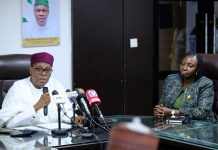
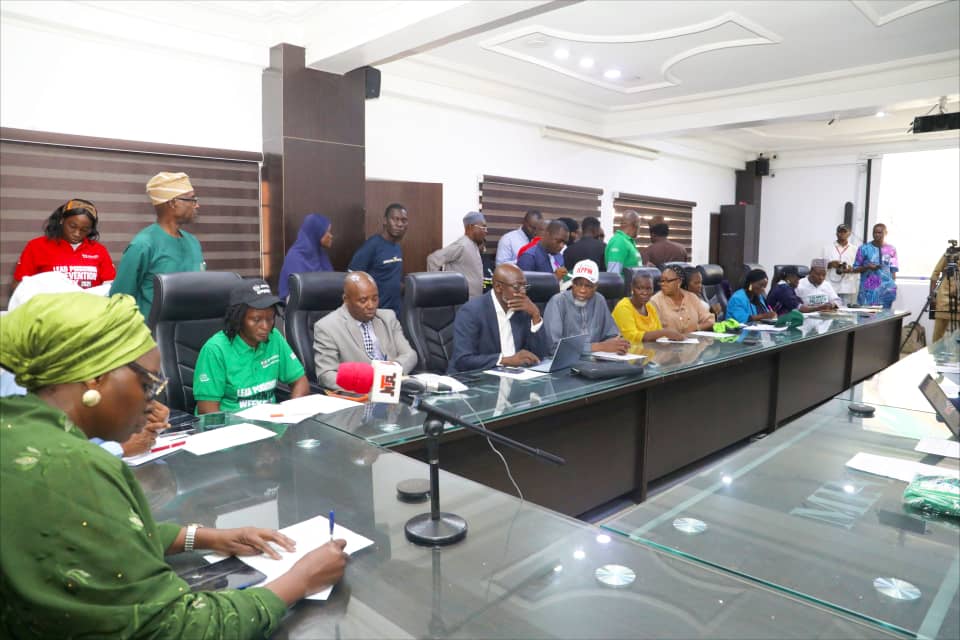
The Coordinating minister of health and social welfare, Professor Mohammed Ali Pate made the disclosure on the occasion of the National lead poisoning elimination day in Abuja.
Themed: “No Safe Level: Act Now to End Lead Exposure”, the Prof. Pate said lead poisoning is not merely an environmental issue, pointing out that it is a serious public health emergency that undermines human capital development.
“Lead is a potent neurotoxin that damages the brain and nervous system, reduces IQ, causes behavioural challenges in children, and contributes to hypertension, kidney failure, and reproductive health problems in adults” he said.
The minister, represented by the Permanent secretary, Daju Kachollom revealed that globally, one in every three children, approximately 850 million, has detectable blood lead levels.
Prof. Pate recalled that in Nigeria, “we have witnessed tragic incidents of mass lead poisoning in Zamfara (2010), Niger (2015), and more recently Sokoto State, where hundreds of children lost their lives due to unsafe mining and ore processing practices”.
He added that the federal government have developed a National Lead Elimination Policy and a 5-Year Strategic Plan to coordinate prevention, detection, and response across multiple sectors, including Health, Environment, Mines and Steel Development, Agriculture, and Water Resources.
He explained that in September 2025, “I inaugurated the National Inter-Agency Working Group on Lead Poisoning Elimination, tasked with strengthening surveillance, reviewing regulations, and mobilizing sustainable financing to end lead exposure in Nigeria”.
He continued: “With support from Médecins Sans Frontières (MSF), we have provided laboratory equipment to high-risk states to expand blood lead testing capacity”.
“We have also conducted treatment for children with elevated blood lead levels, saving lives that would otherwise have been lost to preventable poisoning.
“Our teams have conducted community sensitization campaigns, health education outreaches, and social media awareness drives, promoting simple but effective preventive actions—such as handwashing, safe water use, and hygienic dust control—to minimize household lead exposure”.
Prof. Pate counseled: “Together, let us act with urgency and unity to create a safer, healthier Nigeria—one where every child can live, learn, and grow free from the dangers of lead exposure, because indeed, there is no safe level of lead exposure. Protecting our children from lead poisoning is protecting the future of our nation”
Earlier in a welcome address, the Director, Public Health Department, federal ministry of Health and Social Welfare, Dr Chukwuma Anyaike stated that the Federal Ministry of Health and Social Welfare, through the Department of Public Health, has continue to work closely with sister ministries, state governments, and development partners to implement the National Lead Elimination Policy and Five-Year Strategic Plan.
“Together, we are improving surveillance, strengthening laboratory capacity, and promoting safer environmental practices while raising nationwide awareness about the dangers of lead exposure”.
Additionally he said “As we commemorate this day, let us renew our collective determination to build a lead-free Nigeria. Every action—from enforcing environmental standards to educating families—counts towards protecting the health of our people and the future of our nation”.