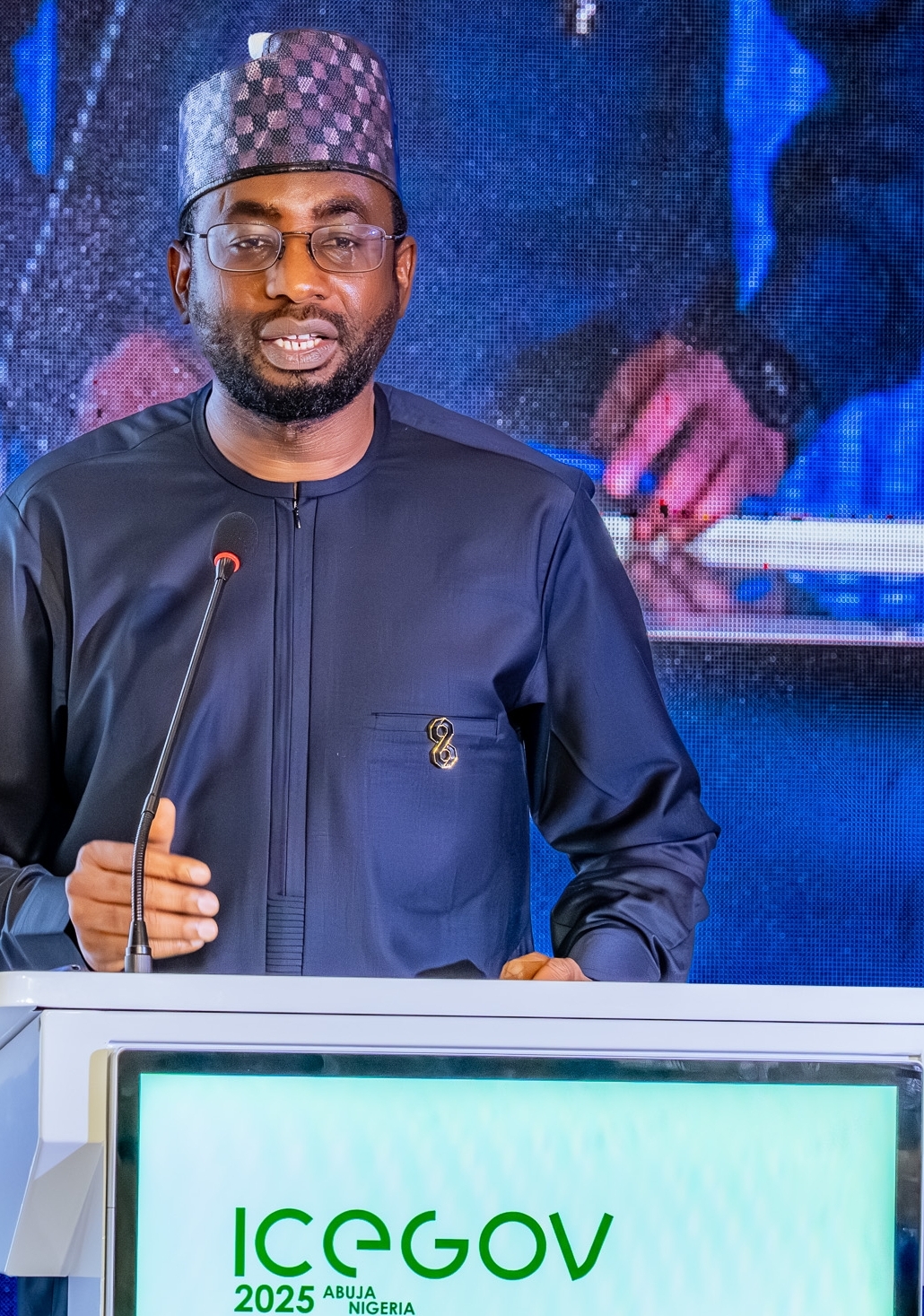

The Director-General of National Information Technology Development Agency (NITDA), Kashifu Inuwa CCIE, has highlighted the significance of sharing knowledge and working together across the African continent, advocating for a collective push towards achieving digital independence.
This comes as Inuwa reaffirmed Nigeria’s commitment to leading Africa’s digital governance transformation, emphasising research, collaboration, and digital literacy as key drivers of inclusive national development.
SINL Nigeria Online reports that this is in alignment with the presidential redefined priority areas of Reforming the Economy for Sustained Inclusive Growth, Enhancing Infrastructure as an Enabler of Growth, Improving Governance for Effective Service Delivery and Accelerating Economic Diversification through Digitalisation, Industrialisation, Creative Arts, Manufacturing and Innovation.
The DG spoke at the 18th edition of the International Conference on Theory and Practice of Electronic Governance (ICEGOV) 2025, themed “Shaping the Future of Digital Governance through Cooperation, Innovation, and Inclusion”, held in Abuja, Nigeria.
Recall, ICEGOV was conceived in 2007 as an annual gathering to bring together academia, governments, international organisations, civil society, and industry to share the latest insights and experiences in the theory and practice of Electronic Governance.
It brings together diverse teams from multiple disciplines and cultures to tackle complex issues and emerging global challenges, with a focus on sustainable development, social inclusion, and active citizenship.
Inuwa said, “Tonight marks a remarkable milestone in our journey to making Nigeria a leader in digital governance. Our participation in previous ICEGOV events inspired us to take on the challenge of hosting the 2025 edition, the first ever in West Africa.”
Inuwa added that Nigeria’s increased involvement in ICEGOV was driven by the vision of the Minister of Communications, Innovation and Digital Economy, Dr Bosun Tijani, who insisted that Nigeria must not only attend but also contribute through research and capacity building.
“Honourable Minister said he wants us to host workshops at the ICEGOV 2024 because he believes in research, and that if we really want to build a robust and sustainable economy, especially in the digital era, we need to invest heavily in deep research, especially in deep tech,” he stated.
Commenting further, Inuwa said hosting ICEGOV 2025 aligns perfectly with President Bola Ahmed Tinubu’s Renewed Hope Agenda, which prioritises economic diversification through digitalisation, industrialisation, creative arts, manufacturing and innovation.
Asserting that the event’s theme mirrors the core of Nigeria’s digital strategy, the NITDA DG explained that co-creation and collaboration are central to the Ministry’s policies, ensuring that digital solutions are designed inclusively and reflect the needs of citizens.
He further disclosed that the conference theme aligns with the Ministry’s strategic plan of Accelerating the Nation’s Collective Prosperity through Technical Efficiency, which is anchored on five pillars: Knowledge, Policy, Infrastructure, Trade, and ‘Innovation, Entrepreneurship & Capital’.
He also spotlighted Nigeria’s youth advantage, noting that the country’s young, digitally native population presents a major opportunity for growth.
“Digital transformation is not just about technology. it’s about improving how we serve our citizens, and governance must meet citizens where they are, which is online. Our goal is to build trust, efficiency, and better service experiences,” Inuwa averred.
To support this vision, Inuwa detailed NITDA’s wide-ranging initiatives aimed at enhancing digital literacy and public sector capacity which include, the National Digital Literacy Framework, aimed at ensuring every Nigerian acquires digital skills from early education to adulthood, a collaboration with the Ministry of Education to integrate digital literacy into school curricula by next year, a partnership with the Head of the Civil Service of the Federation to train all public servants, with over 24,000 already enrolled, and nationwide campaigns to extend digital skills training to market traders, transport workers, senior citizens, and faith-based groups.
“Our goal is to build the capacity, infrastructure, and right policies for Africa’s digital self-determination. ICEGOV gives us the platform to learn, share, and shape that future together,” Inuwa concluded.